Scheduled Service That Prevents Sudden Failures
Water Heater Maintenance in Lincoln for systems requiring inspection and performance checks
Hard water in much of the Lincoln area accelerates sediment accumulation inside water heater tanks, creating an insulating layer that forces heating elements or burners to work harder and longer to reach set temperatures. Routine maintenance from Water Heater Company includes inspection, flushing, cleaning, and performance checks that extend system lifespan and maintain efficiency across both residential and commercial systems. The service prevents unexpected breakdowns and costly repairs by identifying worn anode rods before tank corrosion begins, testing safety valves before they fail closed, and removing sediment before it hardens into a barrier that reduces effective capacity.
Maintenance work varies based on system type and usage—high-demand households or commercial applications require more frequent attention than lightly used seasonal properties. The company tailors maintenance based on whether you operate a gas or electric tank system, a tankless unit requiring descaling, or a heat pump model with air filter and coil cleaning needs. This service supports warranty compliance and long-term reliability, as many manufacturers stipulate annual maintenance to honor coverage on components.
Schedule a maintenance appointment to establish a service interval that matches your system's workload and water quality.
What Happens During Routine Maintenance
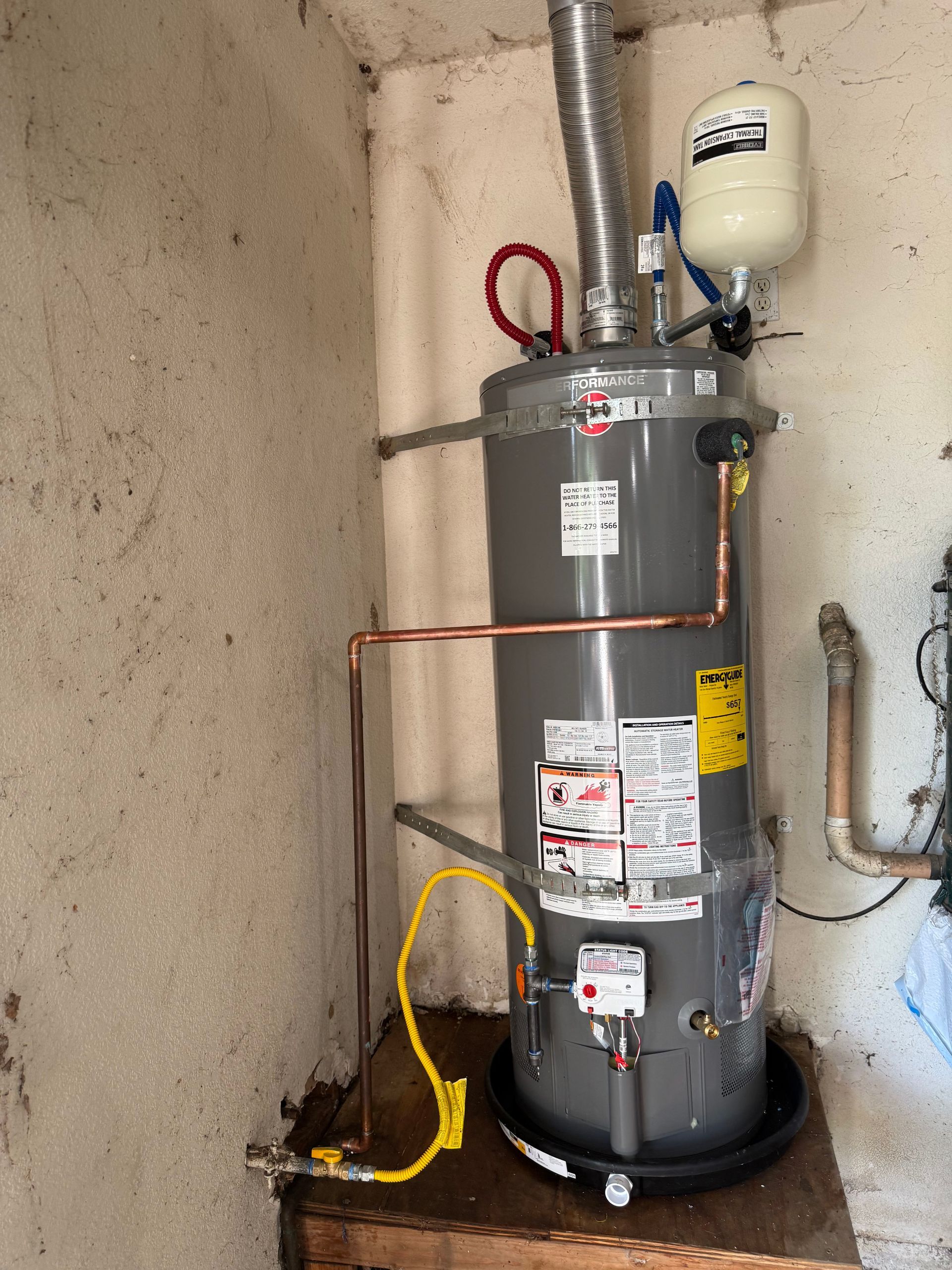
Each maintenance visit begins with testing water temperature at the outlet, checking pressure relief valve operation, and inspecting visible components for corrosion, leaks, or loose connections. Water Heater Company drains the tank to remove settled sediment, examines the anode rod for depletion, and verifies that thermostats cycle heating elements or burners correctly. For tankless systems, the process includes descaling the heat exchanger to remove mineral deposits that restrict flow and reduce efficiency.
After maintenance, your system heats water to the set temperature in less time because sediment no longer insulates the tank bottom from the heat source. You'll notice consistent performance across months of use rather than gradual decline as deposits accumulate, and the elimination of early warning signs like rumbling noises or longer recovery times between showers. The work reduces energy consumption by allowing the system to reach temperature and shut off rather than running extended cycles to compensate for inefficient heat transfer.
Maintenance doesn't repair components that have already failed or reverse corrosion damage once the tank lining has been breached, but it does catch deteriorating parts before they cause secondary damage. Regular service intervals allow you to budget for eventual replacement rather than facing an emergency expense when a neglected system fails without warning.
Maintenance schedules and procedures depend on understanding how your specific system accumulates wear and what factors accelerate deterioration.
What Property Owners Usually Ask
How often does a water heater need maintenance?
Annual service suits most residential systems, though households with very hard water or high daily usage benefit from semi-annual flushing to stay ahead of sediment buildup, while tankless units in areas with mineral-heavy water require yearly descaling to maintain flow rates.
What does sediment flushing actually accomplish?
Draining the tank removes calcium carbonate, magnesium, and other minerals that settle at the bottom and create a barrier between the heat source and the water—eliminating this layer restores efficient heat transfer and reduces the stress that shortens heating element and tank lifespan.
Why does the anode rod matter?
This sacrificial component attracts corrosive elements in the water, protecting the steel tank from rust perforation—once the rod depletes completely, corrosion attacks the tank itself, leading to leaks that require full system replacement rather than a simple rod swap.
Can maintenance extend the life of an older system?
Regular service allows a well-maintained tank to reach or exceed its rated lifespan by preventing sediment accumulation and catching component wear early, though it can't reverse existing corrosion or restore a tank already compromised by years of neglect.
What maintenance do tankless systems require differently?
Tankless units need periodic descaling to clear mineral deposits from the heat exchanger coils, plus air filter cleaning on outdoor models and inspection of flow sensors that regulate burner operation—skipping these tasks causes performance degradation and error codes that shut the system down.
Water Heater Company offers scheduled maintenance plans that establish regular service intervals, providing reminders and priority scheduling to keep your system operating efficiently. Arrange your first maintenance visit to establish a baseline and confirm your system's current condition.