On-Demand Systems Engineered for Continuous Flow
Tankless Water Heater Services in Lincoln for properties with high simultaneous demand and space constraints
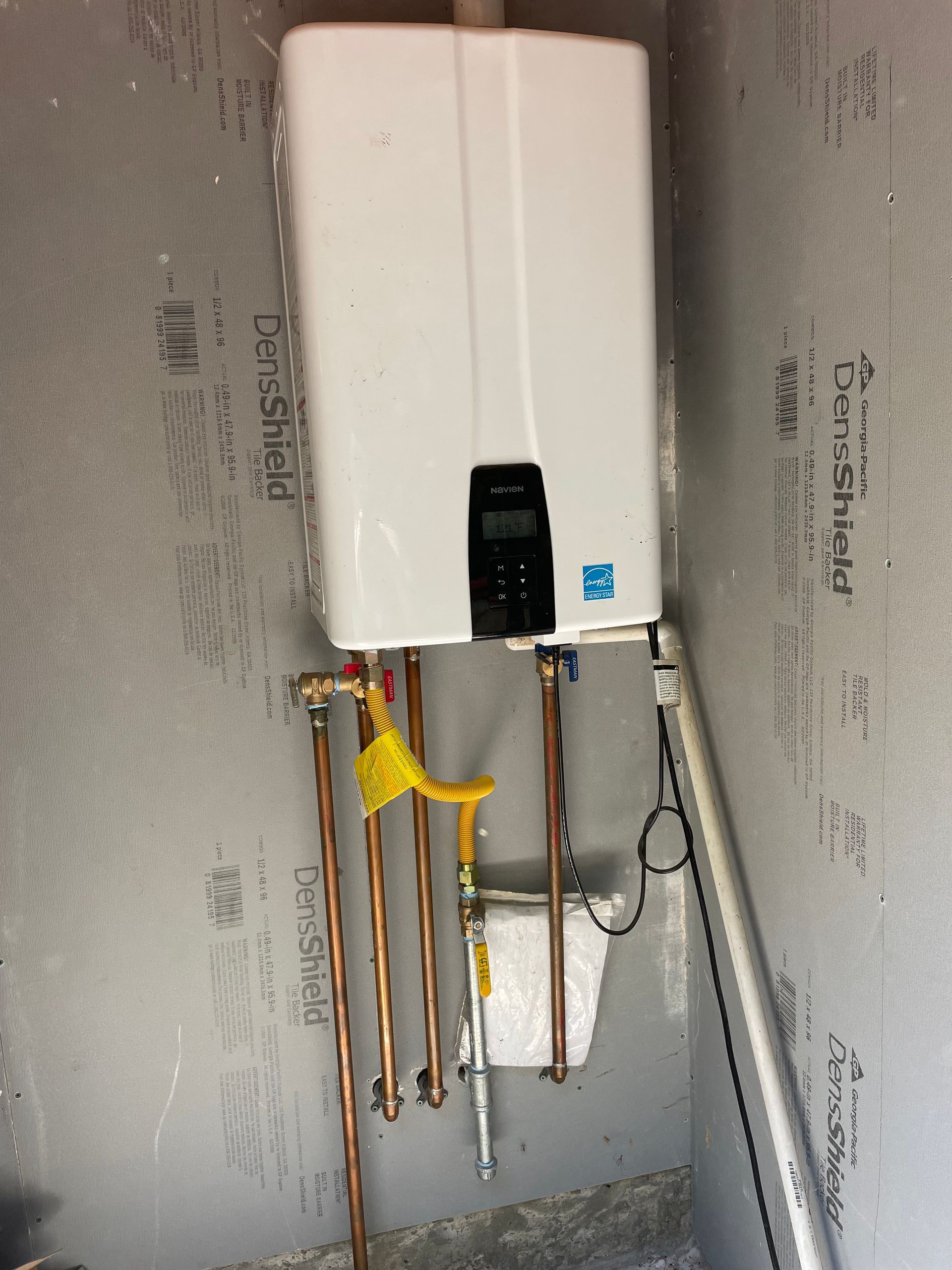
Tankless systems heat water only when a fixture opens, eliminating the standby losses inherent in keeping forty or fifty gallons hot around the clock. Water Heater Company provides installation, repair, and maintenance of tankless water heater systems in Lincoln, serving both residential properties where multiple showers run simultaneously and light commercial applications requiring reliable on-demand delivery. These systems mount on walls rather than occupying floor space, making them ideal for utility closets, compact mechanical rooms, or outdoor installations where interior space comes at a premium. The company ensures proper setup for optimal flow rate and usage, calculating the temperature rise required between incoming groundwater and desired output to match unit capacity with actual demand.
Service work addresses the specific maintenance needs tankless systems require—descaling to remove mineral buildup inside the heat exchanger, cleaning inlet screens that prevent debris from damaging flow sensors, and verifying that gas pressure or electrical input remains adequate for the unit's rated output. The company is skilled in descaling and maintaining performance over time, using circulation pumps and descaling solutions to flush accumulated calcium and magnesium from the coils without disassembling the unit.
Contact the team to discuss whether tankless technology suits your usage patterns and facility constraints.
What Tankless Installation Actually Accomplishes
Installing a tankless system requires verifying that your gas meter and supply line can deliver the higher flow rate needed for instantaneous heating, or confirming that your electrical panel has capacity for the dedicated circuits required by electric models. Water Heater Company handles the sizing calculations that determine how many gallons per minute the unit must produce at your desired temperature rise—undersized units cause flow rate drops when multiple fixtures open, while oversized systems cost more upfront without providing additional benefit. Installation includes mounting the unit securely, running appropriately sized fuel and water lines, and installing venting rated for the higher exhaust temperatures these systems produce.
Once operational, you'll notice hot water arriving at fixtures within seconds of opening the tap, continuous availability during long showers or back-to-back uses, and lower monthly energy costs from eliminating standby heat loss. The system maintains set temperature consistently rather than delivering progressively cooler water as a storage tank depletes, and it operates silently compared to the rumbling or banging common in sediment-filled tank systems. Space formerly occupied by a tank becomes available for storage or mechanical equipment.
Tankless systems don't address slow hot water delivery caused by long pipe runs between the heater and distant fixtures, though adding recirculation systems can reduce wait times. They also require annual descaling maintenance in areas with hard water to prevent mineral deposits from restricting flow and reducing efficiency—skipping this service voids most warranties and leads to premature heat exchanger failure.
Switching to tankless technology involves understanding how these systems operate differently and what infrastructure modifications installation requires.
Common Questions About This Service
What flow rate do I actually need from a tankless unit?
Calculate your peak demand by adding up the flow rates of fixtures that might run simultaneously—a shower at two gallons per minute plus a bathroom sink at one gallon per minute requires a unit rated for at least three gallons per minute at your desired temperature rise above incoming water temperature.
How does hard water in Lincoln affect tankless systems?
Mineral-heavy water accelerates scale formation inside the heat exchanger coils, restricting water flow and insulating the metal from efficient heat transfer—this requires annual descaling using acidic solutions circulated through the system to dissolve calcium and magnesium deposits.
Can a tankless system replace my existing tank water heater directly?
Most replacements require upgrading the gas line to a larger diameter or installing dedicated electrical circuits, plus modifying venting to accommodate higher-temperature exhaust and potentially adding condensate drainage for high-efficiency condensing models.
Why do tankless units sometimes produce temperature fluctuations?
Flow rate variations below the unit's minimum activation threshold cause the burner to cycle on and off, creating brief cold water pulses—this happens when low-flow fixtures like bathroom sinks don't pull enough gallons per minute to keep the system engaged steadily.
What warranty coverage do tankless systems typically include?
Most manufacturers provide ten to fifteen years on the heat exchanger and shorter coverage on electronic controls and sensors, but they require proof of annual descaling maintenance in hard water areas to honor warranty claims on scale-damaged components.
Water Heater Company handles both upgrades from tank systems and service calls for existing tankless installations, ensuring units operate at rated efficiency and flow capacity. Schedule a service visit to address performance issues or arrange descaling maintenance for your current system.