
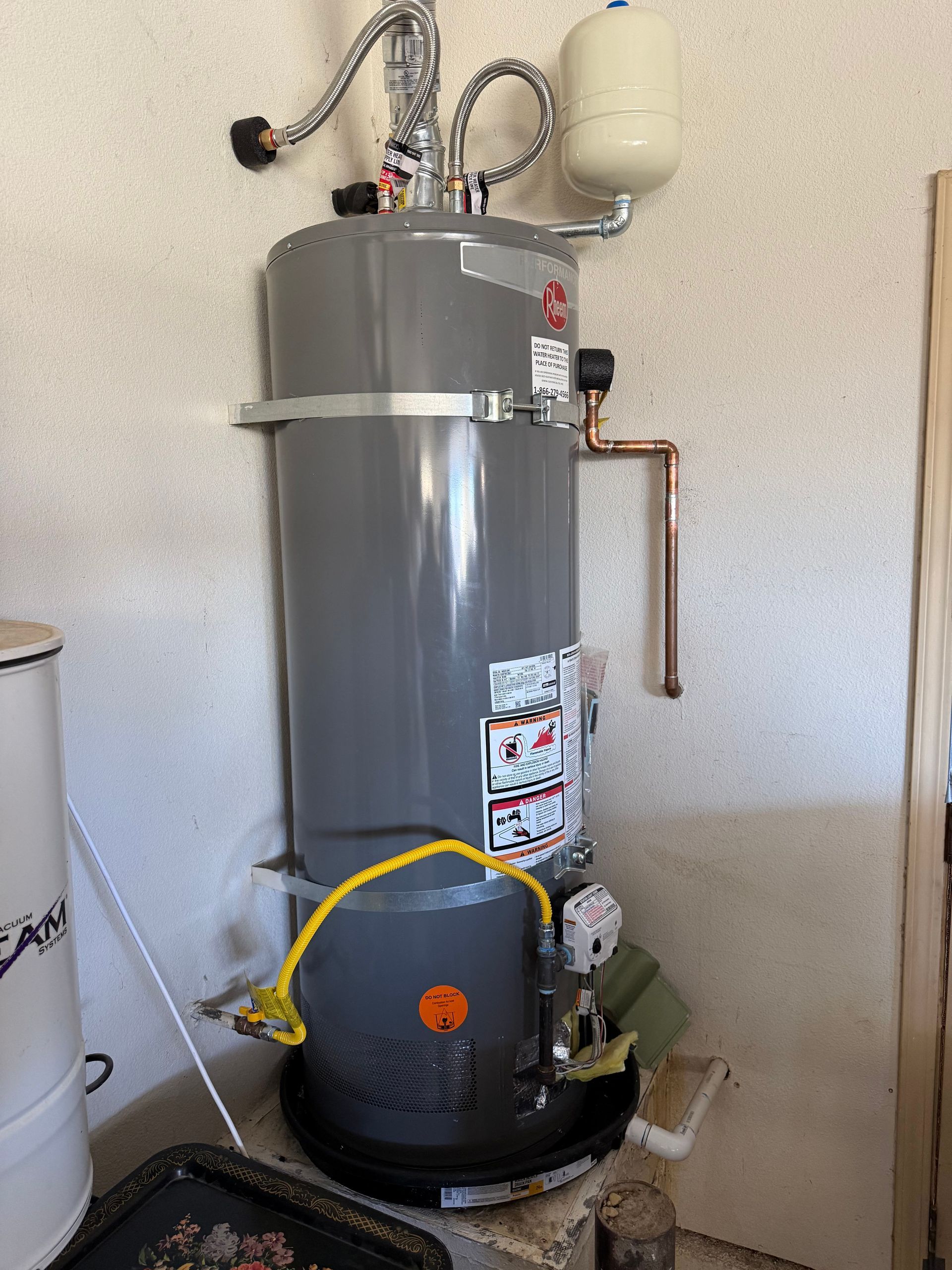
Hot Water Systems Built for Demand
Gas Water Heater Services in Lincoln for properties with high simultaneous use or existing natural gas infrastructure
Gas-fired water heaters deliver faster recovery rates than electric models because combustion produces higher BTU output, making them the standard choice for large households or commercial properties where multiple fixtures run concurrently. These systems require proper ventilation to exhaust combustion gases safely, along with code-compliant gas line connections that prevent leaks and maintain consistent fuel pressure. Water Heater Company installs and repairs both atmospheric vent and power vent gas units across Lincoln, addressing ignition failures, thermocouple issues, and burner performance problems that prevent reliable heating.
The service resolves situations where hot water runs out during showers, where pilot lights extinguish repeatedly, or where the burner ignites but fails to sustain flame. Installation involves gas line sizing verification, vent pipe routing that meets current standards, and combustion air supply assessment to support complete fuel burning. Power vent models use a fan to push exhaust through horizontal venting, which allows installation in locations where traditional vertical flue routing is impractical.
Request a detailed estimate based on your current system type, venting configuration, and whether gas line capacity supports a larger tank or higher BTU burner.
Why Proper Installation Prevents Future Problems
Gas water heater work involves three critical connection points that determine long-term safety and performance: the gas supply line must be sized to deliver adequate fuel volume at correct pressure, the vent system must create sufficient draft or fan capacity to remove combustion byproducts completely, and the temperature-pressure relief valve must terminate in a location that safely discharges superheated water if the thermostat fails. Undersized gas lines cause incomplete combustion and sooting, while improper venting allows carbon monoxide to enter living spaces.
After installation, you notice water heats faster during high-demand periods, the burner ignites consistently without pilot light failures, and the vent pipe exterior no longer shows condensation staining or corrosion that indicates inadequate draft. The system cycles on and off in response to thermostat settings rather than running continuously or failing to maintain temperature.
Repairs often address thermocouples that no longer generate sufficient voltage to hold the gas valve open, burners clogged with dust or corrosion that prevent even flame distribution, or dip tubes that have disintegrated and allow cold inlet water to mix with hot water at the top of the tank. Water Heater Company also evaluates whether existing venting meets current code, as older installations sometimes used single-wall vent pipe that building departments now prohibit.
Property owners often need clarification on when repair makes sense versus when replacement provides better long-term value, along with how gas systems differ from electric alternatives.
Answers to Frequent Service Questions
What causes the pilot light to go out repeatedly?
A faulty thermocouple fails to sense flame heat and shuts off gas flow as a safety measure, or downdrafts from inadequate vent height blow out the pilot, particularly in installations where the vent termination sits too close to roof peaks or lacks a proper cap.
How does tank size affect recovery time for gas units?
A 40-gallon gas water heater with a 40,000 BTU burner reheats completely in roughly 45 minutes, while a 50-gallon tank with the same burner takes about an hour—gas input matters as much as storage capacity for meeting demand.
When should I replace rather than repair?
If the tank shows rust staining at the base indicating internal corrosion, or if the unit exceeds 12 years old and requires burner assembly replacement, the labor cost often approaches half the price of a new system that includes a warranty and improved efficiency.
Why does the water temperature fluctuate?
A failing gas valve may not modulate properly, or sediment buildup at the tank bottom insulates water from the burner flame, forcing longer heating cycles and uneven temperature delivery to fixtures throughout the building.
What venting requirements apply in Lincoln?
Current code requires Type B double-wall vent pipe for atmospheric draft systems and prohibits shared venting with other appliances in most residential installations, ensuring combustion gases exhaust completely without condensation damage or spillage into occupied areas.
Water Heater Company provides gas water heater installation, repair, and safety inspections for residential and commercial properties in Lincoln. Schedule an appointment to assess your current system performance or discuss replacement options that meet building code requirements.