
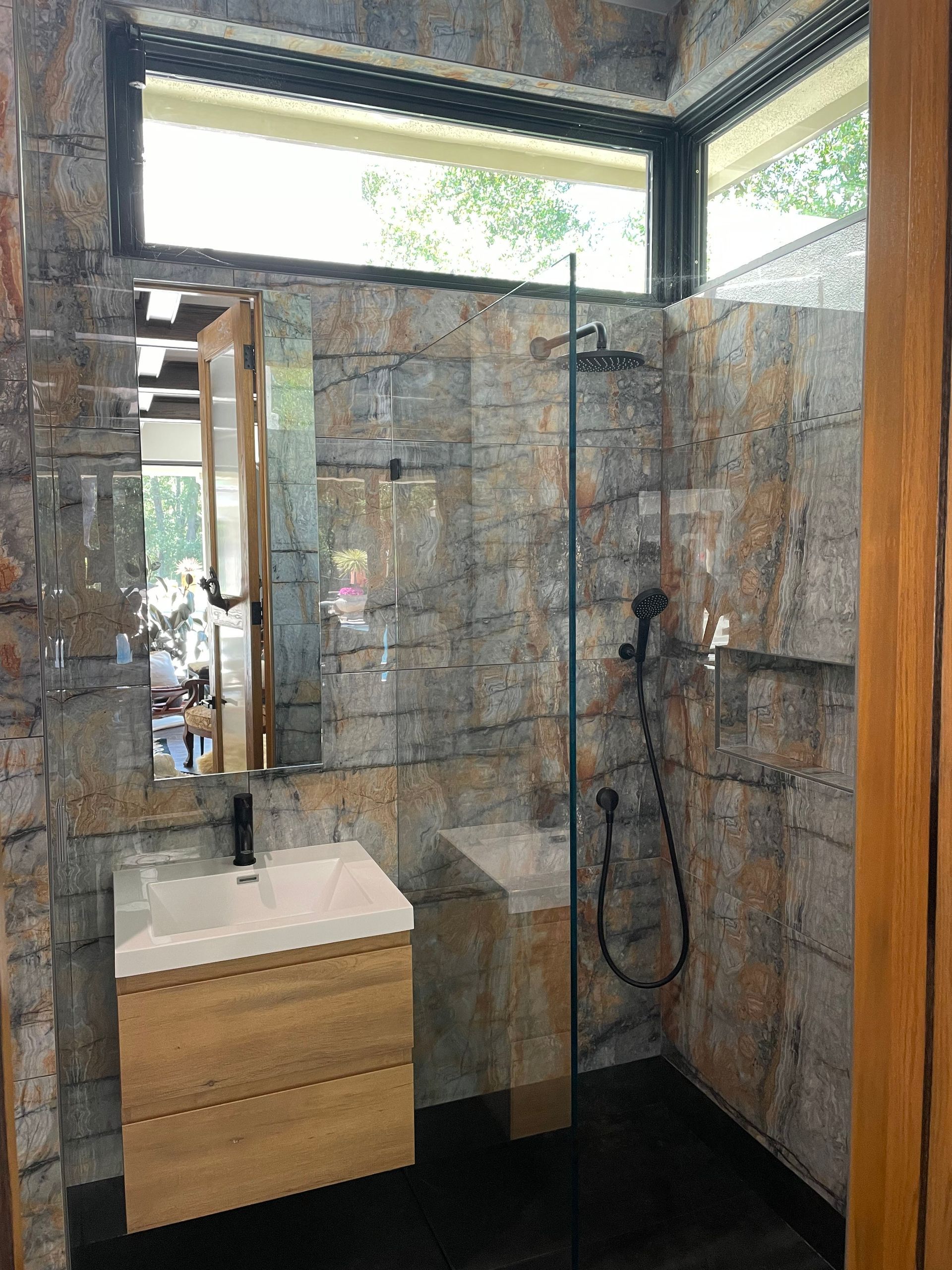
Bathrooms Designed for Daily Function
Bathroom Remodeling in Lincoln for Better Layouts, Updated Fixtures, and More Functional Wet Areas
Outdated bathrooms can make everyday routines feel cramped, inefficient, or difficult to use. Water Heater Company provides bathroom remodeling services in Lincoln that improve both the appearance and functionality of your space. Projects can include fixture and vanity replacement, plumbing updates, layout modifications, tub-to-shower conversions, wet area renovations, and complete bathroom renovations.
Tub-to-Shower Conversions for Easier Access
If your bathtub is difficult to step into or no longer fits the way you use your bathroom, a tub-to-shower conversion can create a more practical solution. Water Heater Company can remove an existing tub and transform the space into a shower designed around your needs. Depending on the project, upgrades may include a new shower base, wall surrounds, fixtures, grab bars, seating, and other accessibility features.
Wet Area Renovations That Refresh the Most-Used Parts of Your Bathroom
The wet areas of your bathroom are exposed to water every day, making proper installation and water management especially important. Wet area renovations can include replacing outdated shower or tub surrounds, updating waterproofing, installing new fixtures, improving drainage, and refreshing worn or damaged surfaces. These updates can help create a cleaner, more comfortable bathroom while addressing issues that may develop around aging wet areas.
From Fixture Updates to Complete Bathroom Renovations
Bathroom projects can range from targeted updates to complete renovations. Work may involve removing existing fixtures and finishes, inspecting plumbing behind the walls, updating supply and drainage lines, modifying the layout, and installing new bathroom components. For larger renovations, existing materials may be removed down to the wall studs and subfloor so underlying plumbing and structural conditions can be evaluated before new construction begins.
Proper drainage, supported supply lines, waterproofing, and code-compliant installation are important parts of any bathroom renovation. Addressing these details during the remodeling process can help create a bathroom that is built for reliable everyday use.
Schedule a consultation to discuss your bathroom remodeling, tub-to-shower conversion, or wet area renovation project in Lincoln.
What Proper Planning Requires
Successful bathroom remodels begin with clear decisions about what problems the project needs to solve—whether that involves adding a second sink to eliminate morning conflicts, installing a walk-in shower to remove fall hazards, or upgrading to low-flow fixtures that reduce water consumption without compromising performance. Water Heater Company works with homeowners to establish priorities before demolition starts, ensuring the finished space addresses practical needs rather than just cosmetic preferences. Choices about tile type, fixture finish, and storage configuration get locked in before rough plumbing work begins, since changing plans mid-project adds cost and delays.
You notice improved water pressure once old corroded supply lines are replaced with properly sized pipe, faster drainage when shower pans and toilet flanges are installed at correct heights, and the elimination of leaks that previously damaged subfloors or wall cavities. The space functions more efficiently when fixture placement accounts for actual use patterns rather than simply replicating the original layout.
Projects typically take one to three weeks depending on scope, with the bathroom out of service during that period. Coordination matters because electrical, plumbing, and finish work must sequence correctly—backing boards for grab bars get installed before tile goes up, drain lines must pass inspection before concrete or mortar covers them, and waterproofing membranes require proper curing time before fixture installation.
Remodeling questions often focus on managing disruption, understanding what the budget covers, and making decisions that balance cost against long-term value.
What Homeowners Usually Ask
What should I finalize before demolition starts?
Fixture selections, tile choices, and final layout decisions must be locked in since changing specifications after rough plumbing installation requires rework that adds both cost and schedule delays—supply line placement and drain locations depend on exact fixture dimensions.
How does Lincoln's building code affect bathroom remodels?
Current code requires GFCI protection for all bathroom outlets, proper ventilation either through windows or exhaust fans rated for the room size, and water-resistant drywall in wet areas, along with inspection signoffs at rough plumbing and final stages.
Can plumbing be relocated to change the layout?
Drain lines can move if the floor structure allows proper slope to the main stack, but significant layout changes may require opening walls or floors in adjacent rooms, and toilet relocation depends on proximity to the existing soil stack.
What happens if hidden damage appears during demolition?
Water damage to subfloors or wall framing requires structural repair before finish work proceeds, which extends the timeline and adds material cost—this commonly appears in bathrooms with long-term leak history or failed waterproofing.
Why do material choices affect project cost significantly?
Tile installation labor often exceeds material cost for complex patterns or small mosaic formats, while standard fixture upgrades like thermostatic shower valves add both product and installation expense compared to basic single-handle controls.
Water Heater Company manages bathroom remodeling projects from planning through final inspection across Lincoln, handling plumbing, fixture installation, and coordination with other trades. Set up a project consultation to review your space, discuss functionality goals, and develop a timeline that works with your household schedule.